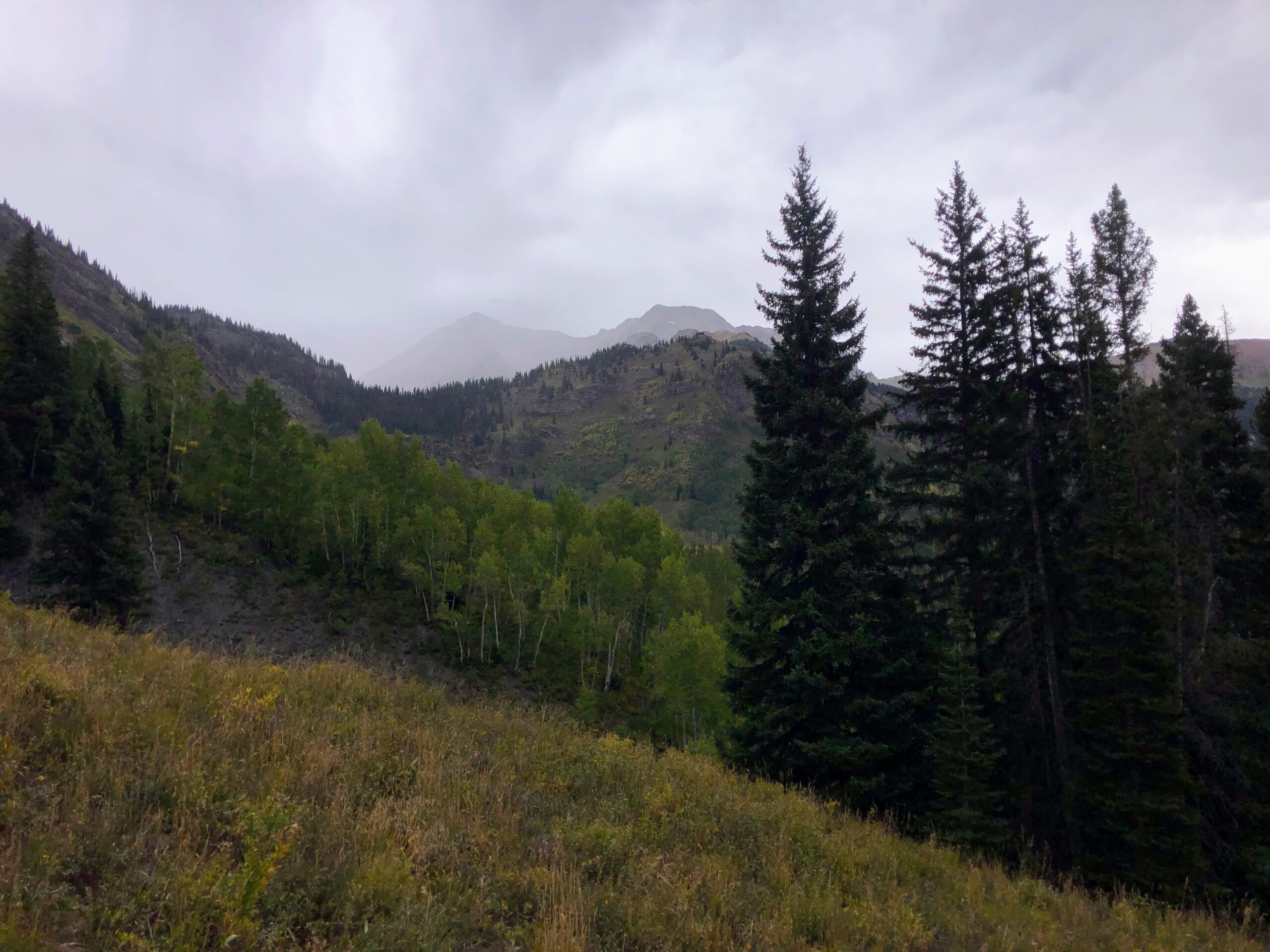
After we watched the helicopter depart with its black body-sized package hanging below, watched the new widow follow a ranger down the trail, retrieved the backpack that had flown into a ravine from the circulating air, we contemplated what to do next.
“Well, shall we finish?”
We were half a mile from the peak and both needed badly to eat, so we proceeded to the top for a view that stood in stark contrast to the rest of our morning.
We’d made a last-minute decision that morning to take a different trail, which was how we happened across a couple in their seventies sitting on the ground, asking passersby for aspirin.
We dug through the first aid kits. Nope.
Then, cautiously, and already knowing the answer, “…is something wrong?”
“He thinks he’s having a heart attack,” Shirley answered. She appeared not to fully believe it, which was understandable given the very normal-looking man sitting beside her in the sunshine.
We decided to head up the trail to try for cell reception—usually there’s a bit at the peak where the surrounding mountains aren’t blocking the signal—and took off at a trot. Soon, we found a few bars, and spoke with a ranger who promised a helicopter. We descended to the couple and waited uneasily.
“What should I pray?” I asked the Lord as I stood there feeling helpless. I had the sense of warm light enveloping Jay, and I held him in that light, in my mind and in my heart, even as we stood there chatting, even as we stood there acting as if nothing were wrong.
It was sunny, and Jay, lounging near the trail, had a perfect view of the peak to which he’d been headed. A hiker passing by expressed concern, and he turned to Shirley and winked. She smiled and winked back as if they were exchanging a secret. I saw a man who knew he probably wasn’t okay, winking reassurance at his wife, winking a conspiracy that only the two of them were part of, winking with a good-natured humor that I’d picked up on in just a half hour of knowing him.
I will never forget that wink; it was years in the making.
A moment later, his face twisted, and his eyes rolled upward. Shirley screamed, and people came running. They moved Jay to a flat area and began CPR, forcing breath into his lungs, giving compressions to his chest. Shirley watched anxiously. Clouds rolled in, bringing a sprinkle of rain, as if the weather were grieving with us.
Someone told Shirley to move up the trail, where she couldn’t see the commotion. I’d spent only a few months as a chaplain intern at a hospital, but I knew that when someone is dying, families get to stay. I asked Shirley if she wanted to be there. “Yes!” was the emphatic reply. We sat on the grass nearby, watching, waiting.
Time passed. Where was the helicopter? The rescue team was waiting for the sudden clouds to clear.
What does one do while waiting for a delayed helicopter with a bereaved wife nearby except continue to try to revive her husband? It felt as if we were all keeping up the act together; it had certainly been too long.
To take her mind from the situation, which was growing more somber by the minute, I asked Shirley how she’d met Jay.
Her face lit up. “He came to the door selling oranges. I told him to go away.”
He was several years younger, and she was raising a child on her own. He persisted, and she gave in. They’d been married nearly forty years.
Shirley smiled as she talked about the past, and I watched her face relax. Memories transport people; instead of sitting next to the body of their loved one, they are lost in a joyful moment years ago, on a beach, in a childhood home, or at that first meeting of two kindred souls.
This was replaced by a more sober attitude as the helicopter finally landed, hours after that first call, and a paramedic jumped out and pronounced Jay dead.
The last two things he saw before he died (other than myself, standing over him), were the top of Mt. Marcy, and his wife’s smiling wink.
“It’s weird,” I commented later, as I ate my sandwich at the peak, “I just witnessed someone having the worst day of her life, but I feel like I’ve had my best…maybe I’m supposed to be a chaplain after all.”
There was a sense of having been in the right place at the right time. It mattered that Shirley had someone sitting next to her while she watched her unconscious husband move from life to death. It mattered that someone heard her story of meeting him. It mattered that I was there, and it made me think I was called to something I’d only thought of as a convenient post-graduation job before.
Truthfully, I keep hoping I’m not called to it long-term. There are many moments of beauty, but there’s also a lot of grief in the work. Maybe I could work at a retreat center—something that involves more sunshine and butterflies. But there are days when I know I am in the right place at the right time, and that it matters I was there.
Most of the time I spend with grieving people is ordinary. Not as dramatic as people imagine when they hear the words “hospice chaplain”—and certainly not as dramatic as my time with Jay and Shirley. But it still matters that someone is present, listening to a grieving person tell what her mother was like when she was young, or what happened that Christmas, or how many years they’d been married and how it seemed so short.
Maybe it matters that at least one person in the room knows that God is there, too, and is holding each of these people in the warm, enfolding light.