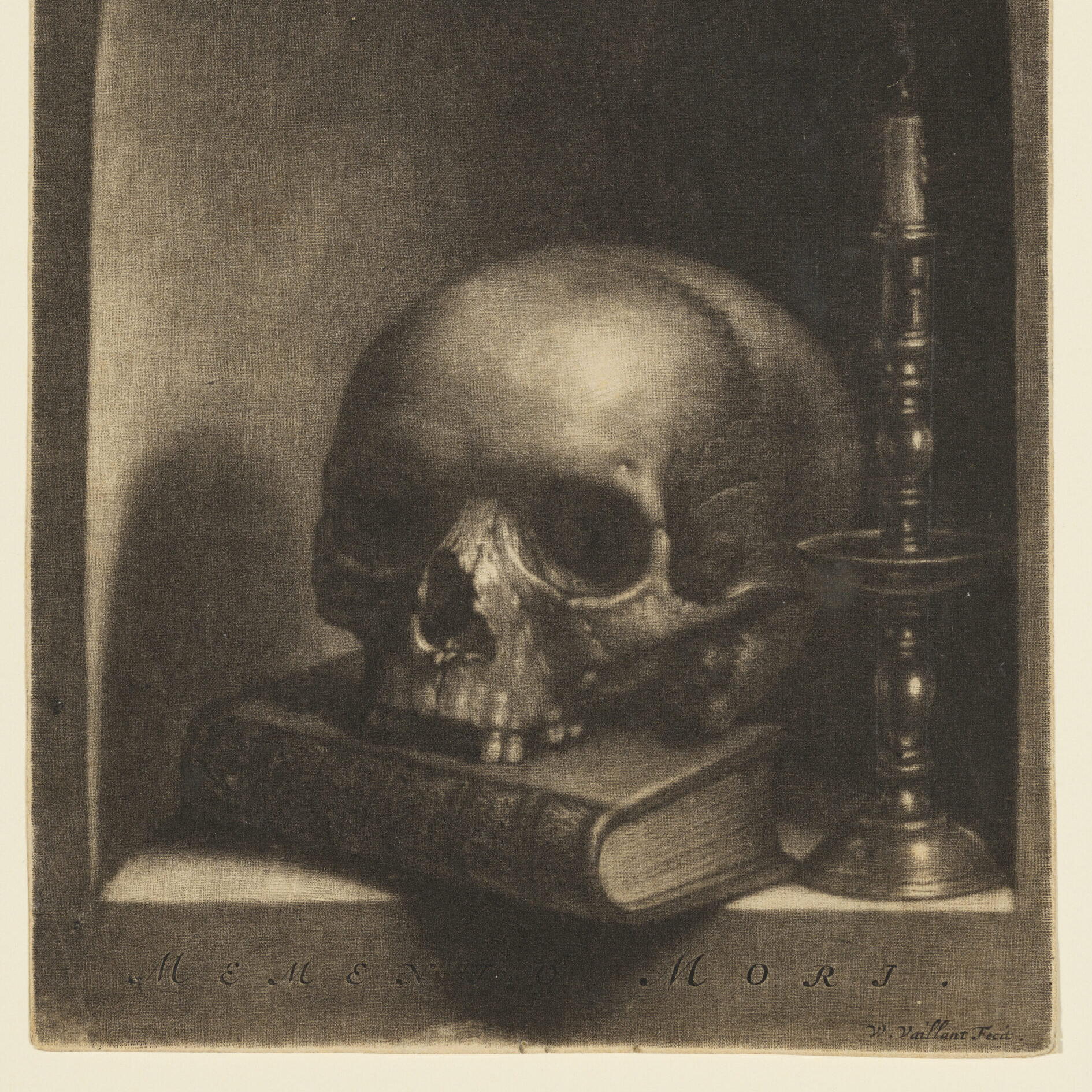
You’ve likely heard the phrase, memento mori. Or you’ve seen those 17th century paintings with the skulls in them. The Latin, “remember you must die,” refers to such visual reminders of death. Some saints are depicted with human skulls—constant reminders of their mortality.
And you thought Ash Wednesday services were morbid.
The remembrance of death isn’t about death itself. It’s about life. It’s about honoring how precious it is and paying attention to how we want to live.
I can tell you with complete confidence that we live in a culture that denies death, despite entertainment media filled with it.
The data I have for this is that I am a hospice chaplain and my job is to pray for, listen to, sing with, bring communion to and otherwise support people in their last months of life. I also have the coveted job of asking which funeral home they want to use.
No one wants to think about this, including me. I have been working in hospice almost five years, and I keep curated lists of funeral homes in various parts of Denver, sorted by the types of services they provide or the populations they serve: Catholic funeral homes, Jewish funeral homes, Hispanic funeral homes, crematoriums, natural burials (yes, you can be a tree one day!). It only occurred to me in writing this that I’ve never considered which one I would want to use. Because, of course, I’m thirty-seven years young, and I am definitely not going to die. Funny our ability to ignore things.
Typically, the mortuary conversation goes something like this.
Me: “Have you thought about which funeral home you mother will use?
Son of a 90-year-old: “Oh, I don’t think we’re at that point yet!”
I have news: we’re at that point.
I explain that of course their loved one on hospice isn’t dying, but we like to have their choice on file, just in case something unexpected were to happen, because 3 AM is not the time to make such decisions.
It’s also not the time I want to get a phone call about this, so I try to stay on top of it.
If you’ve ever been to an Ash Wednesday service, you’ve had someone run their blackened finger across your forehead in the shape of a cross, saying, “Kara, remember you are dust and to dust you will return.”
One of my favorite, favorite privileges as a person in ministry is to impose ashes. To whisper to babies and friends and people nearing the end of their earthly lives, “Jane, remember you are dust and to dust you will return.” It is utterly haunting, but over and over, as the people shuffle forward and look at me expectantly or with trepidation (because this is a weird thing to do, after all), over and over, I realize this life is so precious and short, and so is this one, and this one, and this one…
This year, I held such a service in a memory care community. One of the residents is a retired pastor, and I asked him to put ashes on me, realizing that this was likely last black cross he would draw across anyone’s forehead.
Remember you are dust and to dust you will return.
Working in hospice, I have watched so many people die I’ve gotten to where I can predict how long they have: weeks, days, hours. I have watched bodies slowly shut down, moods and appetites change, breathing slow.
Yet, I have spent most of my years in hospice paralyzed about how to live my own life. I spend so much time with people in their nineties that I forget I’m in my thirties, and I start to think my life is almost over and what if I don’t live it fully, or fulfill my calling, or even figure out what my calling is? What if I get to the end and find that I’ve missed the boat? The purpose? The main point?
I can assure you this is not a helpful way to remember your death.
Annie Dillard wrote, “How we spend our days is, of course, how we spend our lives.” Who do I want to be at the end of my life?
So, how do I spend my days?
I’m learning to embrace the things I love, to set goals and work toward them, and to make sure my priorities are straight, because all those daily choices—the choice to sit down and write every morning, for instance—add up to a life. And at the end of my life, I want to know that I climbed the mountains and listened to the music and wrote my heart out and added some beauty for others and paid attention to the ways God is present, though I am often unaware of it. You perhaps have your own list.
The remembrance of death isn’t about death itself. It’s about life. It’s about honoring how precious it is and paying attention to how we want to live.
Here’s a spiritual practice: make a will. Or update it if it’s been a while. Partially, to save your family the joy of waiting on the state to decide what to do with your worldly possessions. Partially, because it gets us thinking about what money is for, and how we want it to be used. “Where your treasure is, there your heart will be also,” said Jesus. His next line, I think, was, “Where you plan your treasure to go is also a good indicator.”
Making a will is the closest thing I can think of to a modern-day memento mori, what with the lack of human skulls lying around. Things get real very quickly. You start thinking about the people you’ll leave behind, and what they mean to you, and how you hope to bless them a little when you leave this earth. And which causes you care about, and how you’d like to help them, too. And you wonder who will murder you for the meager inheritance, then realize you’re safe because there’s no way it’s worth the risk. And then you think how much you love those people and how you should spend a little more time with them.
After you write your will—type it into the online form or discuss it with your estate planner or scribble it on a note in your desk—dream about your life a little. Decide you’re going to visit seven continents, or that you’ll spend a little more time each day with someone you love.
After that, get some ice cream. Life is short.
When I finish speaking about Lent at the memory care, I turn to the man and ask if he’d like to add anything. Not understanding, he takes my expectant look as an invitation to pray and begins speaking to the Lord for all of us, as if he’s never forgotten a thought in his life.
Having spent his days praying, he has spent his life praying.
Someday when I am in a memory care, if you come to do the Ash Wednesday service, kneel down next to me and let me draw the dusty cross on your forehead—let me remind you to live.