When a person nears the final days of their life, their organs slowly shutting down, their sleep stretching around the clock, they usually lose the ability to drink water. Sometimes they become too sleepy and disoriented, sometimes they simply aren’t thirsty anymore, and sometimes they begin to choke when they swallow. In hospice, when this happens, we use a small, colored sponge affixed to the end of a stick, soaked in water. This is used to wet their lips, wipe the crusty buildup from inside their mouth, give them a sense of having had a drink, to quench their thirst.
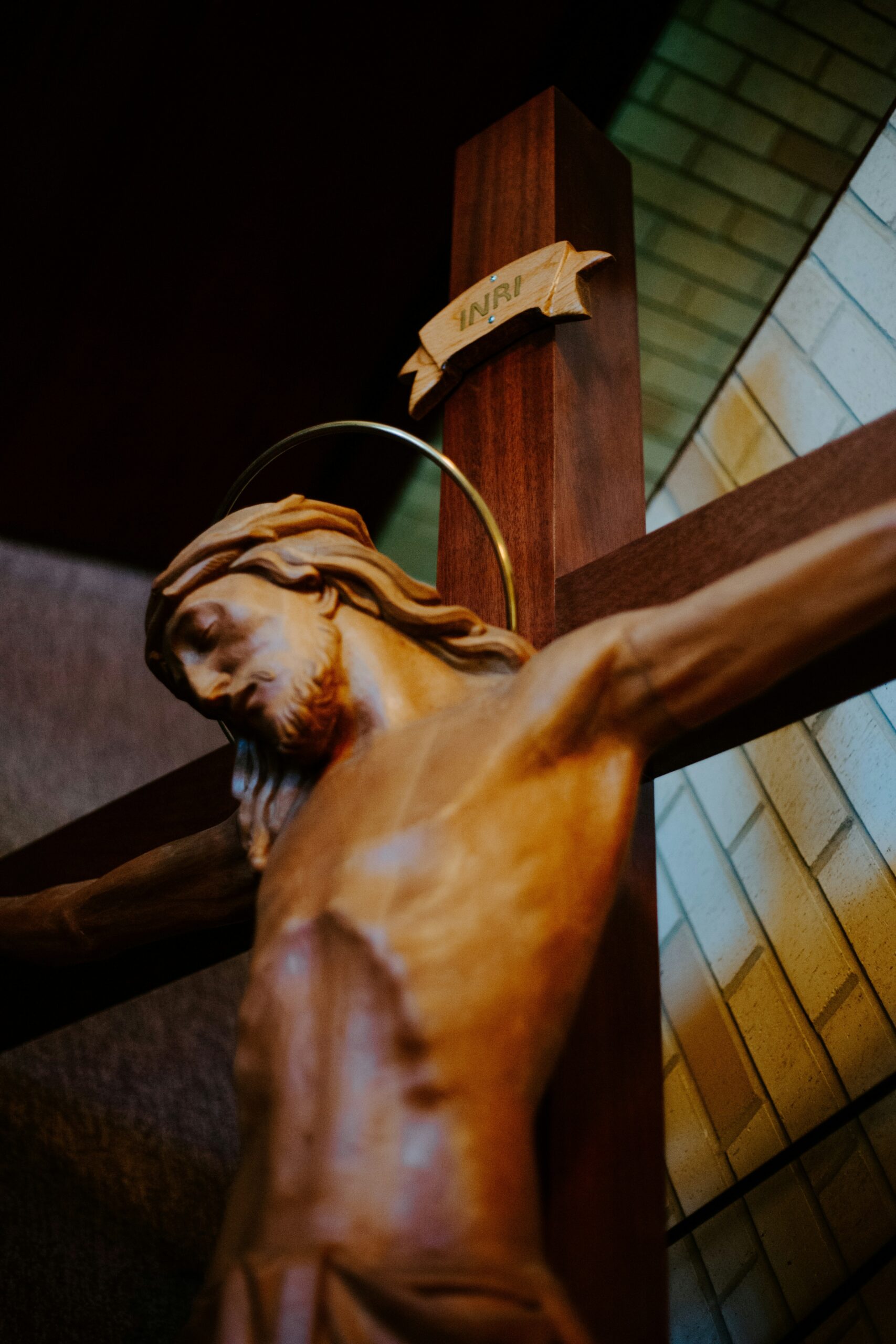
Jesus’s dying process was strikingly like the ones I’ve watched in my work as a hospice chaplain, though it was certainly more gruesome. In his final hours, hanging on a cross, dying from loss of blood, loss of oxygen, even as he can no longer drink without choking, he cries out: “I thirst.” Someone hears and comes running with a sponge on a stick, soaked in wine and vinegar.
Amid a death that is somewhat hard to wrap my mind around (despite all the Sunday school lessons and Good Friday services), Jesus expresses one of the most ordinary human needs: thirst. A simple, small need. But anyone who’s been without water knows the pain of not having it.
Mother Teresa saw Jesus’s thirst as a central theme in her work with the dying of India. Christ on the cross is thirsty—for water, for those he loves. Those in whom we meet Christ are thirsty—for water, for connection, for love. Mother Teresa (now St. Teresa of Calcutta) saw her service as a way of offering a few drops of drink to Jesus, a way of showing each person the love God has for them. This was so important to her that she had the words, “I thirst,” written near the cross in each chapel the Missionaries of Charity worshiped in.
Her work was simple—carrying dying people off the street and bringing them into shelter where, if nothing else, they would be with people who saw them as humans. It was offering water, cleaning dirty bodies, bandaging wounds.
“When did we see you thirsty?” ask the sheep—the ones considered the good guys in the story of Matthew 25. “Whenever you did it for the least of these,” says Jesus, “you did it to me.”
This is simple work: speaking kindly to a person who doesn’t hear kindness often, or giving a bottle of water to someone standing on the corner, or opening the door for a stranger who looks tired. It matters not because it will fix anything, but because it is an act of love.
If anyone gives a cup of cold water—or even a sponge-full—to “one of these little ones,” says Jesus, they will receive an eternal reward. Love is never a small thing.
I doubt often that my work matters; it certainly doesn’t feel remarkable most days. It’s just driving around in bad traffic, lugging a guitar in and out of buildings, sitting with people who can’t talk to me because of the dementia, saying prayers that feel flimsy compared to all they are experiencing.
This work is small the way a few drops of water on dying lips is small. And, it is everything to the person experiencing it.
It is a listening ear, a peaceful presence, a hand to hold. And it’s not just my work; it’s your work as well. You affect people every day. Here’s a secret: if you can sit and be present with another person without trying to fix anything, if you can listen, if you can just see the person in front of you as a person—a real live human who is so imperfect—you will be offering water to a parched world, dying for connection.
“I thirst,” says Jesus on the cross.
“Would you get me a cup of ice?” asks a woman whose kidneys are failing.
“She’s not drinking anymore,” says a daughter.
“Here, here’s a sponge,” I reply.
This post was inspired by my friend Quentin M.